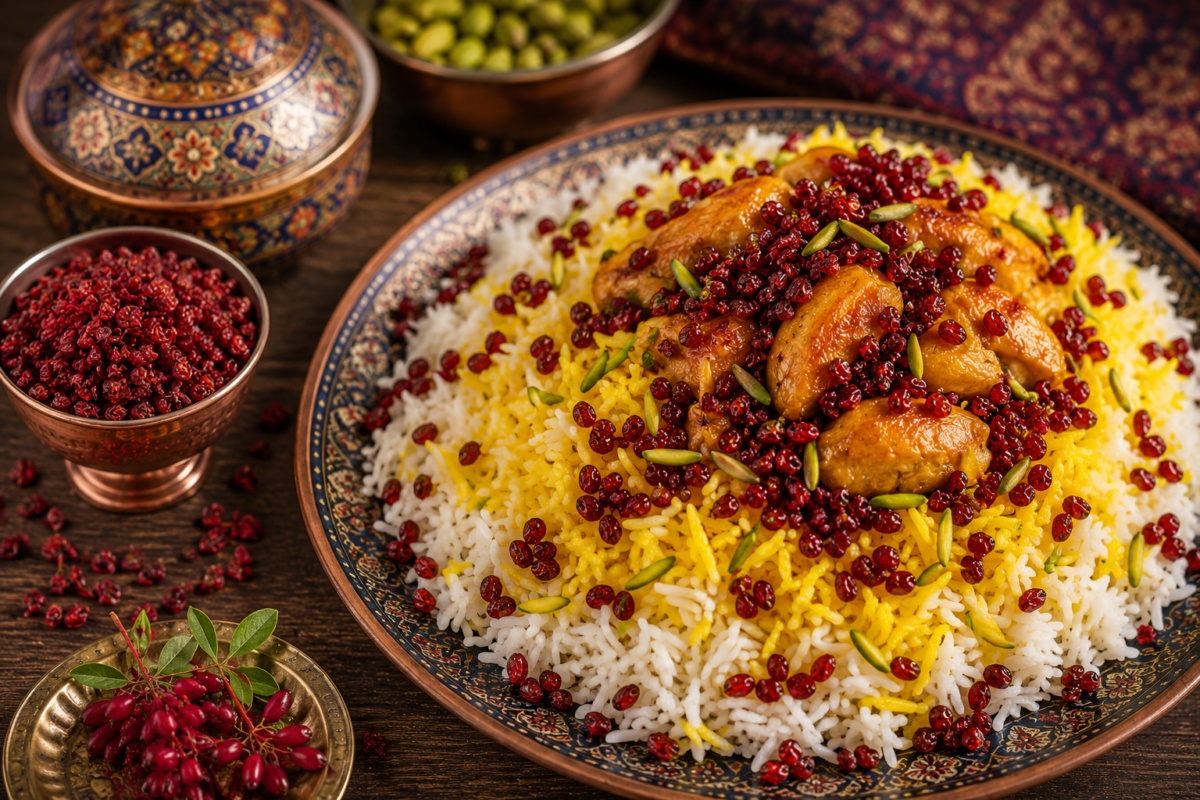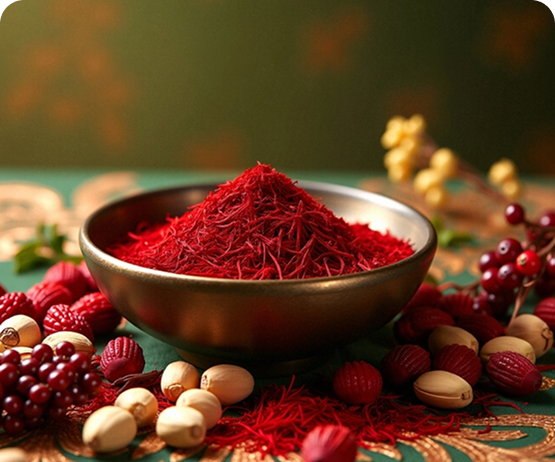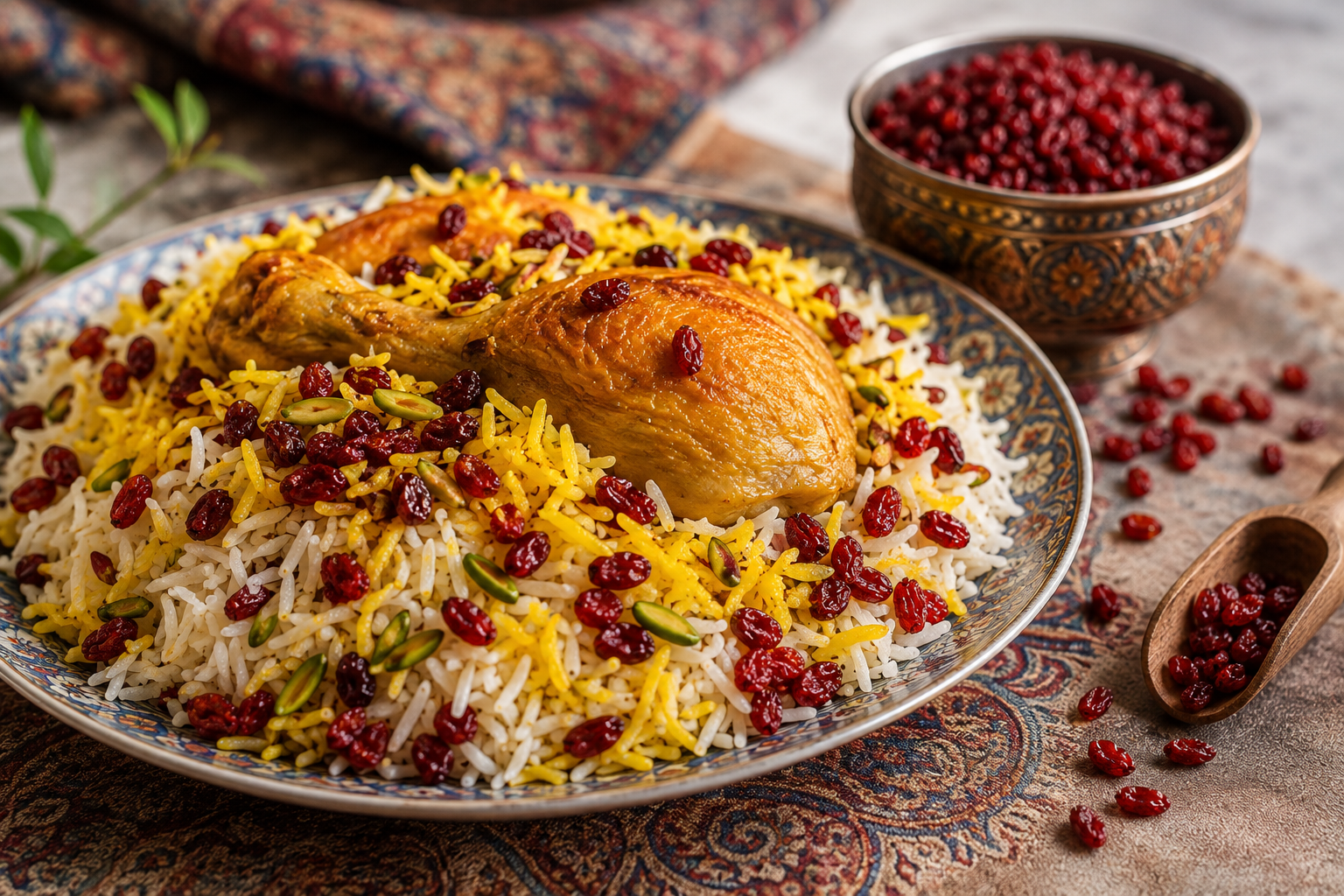
If you have ever seen small, bright-red berries scattered over golden Persian rice, you have probably encountered zereshk. Known in English as Persian barberries, these small dried fruits are one of the most distinctive ingredients in Iranian cuisine. They are intensely tart, naturally colourful and surprisingly versatile.
Zereshk is especially famous in zereshk polo, the Persian rice dish in which tart barberries are combined with fluffy rice and saffron. But there is much more to this ingredient than one recipe. You can use dried barberries as a garnish, cook them with rice, combine them with chicken, add them to salads and grain dishes, or use them in sweet and savoury recipes.
This guide explains what zereshk is, where Persian barberries come from, how to prepare barberries, how to make a practical zereshk polo recipe, how to store dried barberries, what to consider when buying them in Europe, and how to use them without losing their bright colour and characteristic sour flavour.
What Is Zereshk?
Zereshk is the Persian name commonly used for edible barberries. The fruit is small, red and naturally tart. In Iranian cuisine, seedless barberries are especially valued because they are easy to cook and pleasant to eat.
Scientific literature describes Berberis species as important food plants in Iran, where dried fruit is used in rice dishes, sauces, jams, juices and other foods. The exact botanical species can vary, so “zereshk” should be understood primarily as a Persian culinary name rather than assuming every product sold under the name comes from exactly the same species.
Zereshk in English: What Do You Call It?
If you are searching for zereshk in English, the most useful translation is “barberry” or “Persian barberry.” You may also see terms such as dried barberries, Iranian barberries or seedless barberries.
For shoppers outside Iran, “Persian barberry” is often the easiest phrase to understand because it communicates both the ingredient and its culinary tradition.
Where Do Persian Barberries Come From?
Iran has a long tradition of growing and eating barberries. Research on Iranian seedless barberry identifies South Khorasan as a major production region, with areas around Birjand and Qaen strongly associated with cultivation.
The dry climate and local agricultural knowledge have helped make South Khorasan particularly important for Iranian barberry production. This regional connection is part of what gives zereshk its strong place in Persian food culture.
What Do Barberries Taste Like?
The first thing many people notice about zereshk is its tartness. Dried barberries are naturally sour, with a bright fruit flavour that can cut through richer ingredients.
That acidity is exactly why barberries work so well with saffron rice and chicken. The rice provides a soft, fragrant base, while the barberries add small bursts of sharp flavour and colour.
If you find them too sour when eaten alone, they are often better balanced with a little sweetness, butter, oil or a richer main dish.
If you want to buy Zereshk (barberries), you can buy them here. : Barberries Saffronir Shop
Why Are Barberries So Popular in Persian Cooking?
Persian cooking often balances different flavours rather than relying on one dominant taste. Zereshk is particularly useful because its sourness provides contrast.
In a plate of zereshk polo, saffron brings floral aroma and golden colour, rice provides a neutral foundation, and barberries contribute acidity and fruitiness. This combination creates a dish that is visually striking as well as balanced in flavour.
Zereshk Polo: The Famous Persian Barberry Rice
Zereshk polo is one of the best-known ways to use Persian barberries. The dish combines steamed Persian-style rice with saffron and a sweet-tart barberry topping.
It is often served with chicken, making zereshk polo ba morgh one of the classic combinations. The barberries are usually prepared separately and added near the end so they keep their colour and texture.
For Saffronir, this topic also creates a natural internal link to the existing Saffron Rice article, because readers interested in saffron rice are highly likely to be interested in the barberry version.
Easy Zereshk Polo Recipe
Ingredients for about 4 servings:
• 2 cups basmati rice
• ½ to ¾ cup dried barberries
• A small pinch of saffron threads
• 2–3 tablespoons butter or neutral oil
• 1–2 teaspoons sugar, optional
• Salt
• Water
Method:
1. Rinse the rice several times until the water becomes clearer.
2. Parboil the rice in salted water until the grains are partially cooked.
3. Drain the rice and steam it gently until fully cooked and fluffy.
4. Prepare a saffron infusion by gently crushing a small amount of saffron and blooming it in warm water.
5. Rinse the dried barberries quickly and drain them.
6. Warm butter or oil in a pan over low heat.
7. Add the barberries and cook briefly. If they are very tart, add a small amount of sugar.
8. Add a little saffron infusion to the barberries for extra colour and aroma.
9. Mix a small portion of cooked rice with saffron.
10. Serve the plain rice topped with the golden saffron rice and the prepared barberries.
Do not cook the barberries for a long time. Their small size means they can become soft quickly, and excessive heat can reduce their fresh colour and lively flavour.