Introduction
Saffron is one of the world’s most distinctive spices. Just a small amount can add a beautiful golden colour, floral aroma and rich flavour to food and drinks. However, if you are using saffron for the first time, knowing how to prepare and add it correctly can make a big difference.
This guide explains how to use saffron in everyday cooking, including rice, tea, chicken, curry, desserts and milk. You will also learn how much saffron to use, how to prepare saffron threads and how to store them properly.
How to Prepare and Use Saffron
Saffron is made from the dried red stigmas of the Crocus sativus flower. Because each flower produces only a few usable threads and harvesting is done by hand, saffron is a naturally precious spice. Whole, well-preserved threads also make it easier to control the amount, colour and aroma.
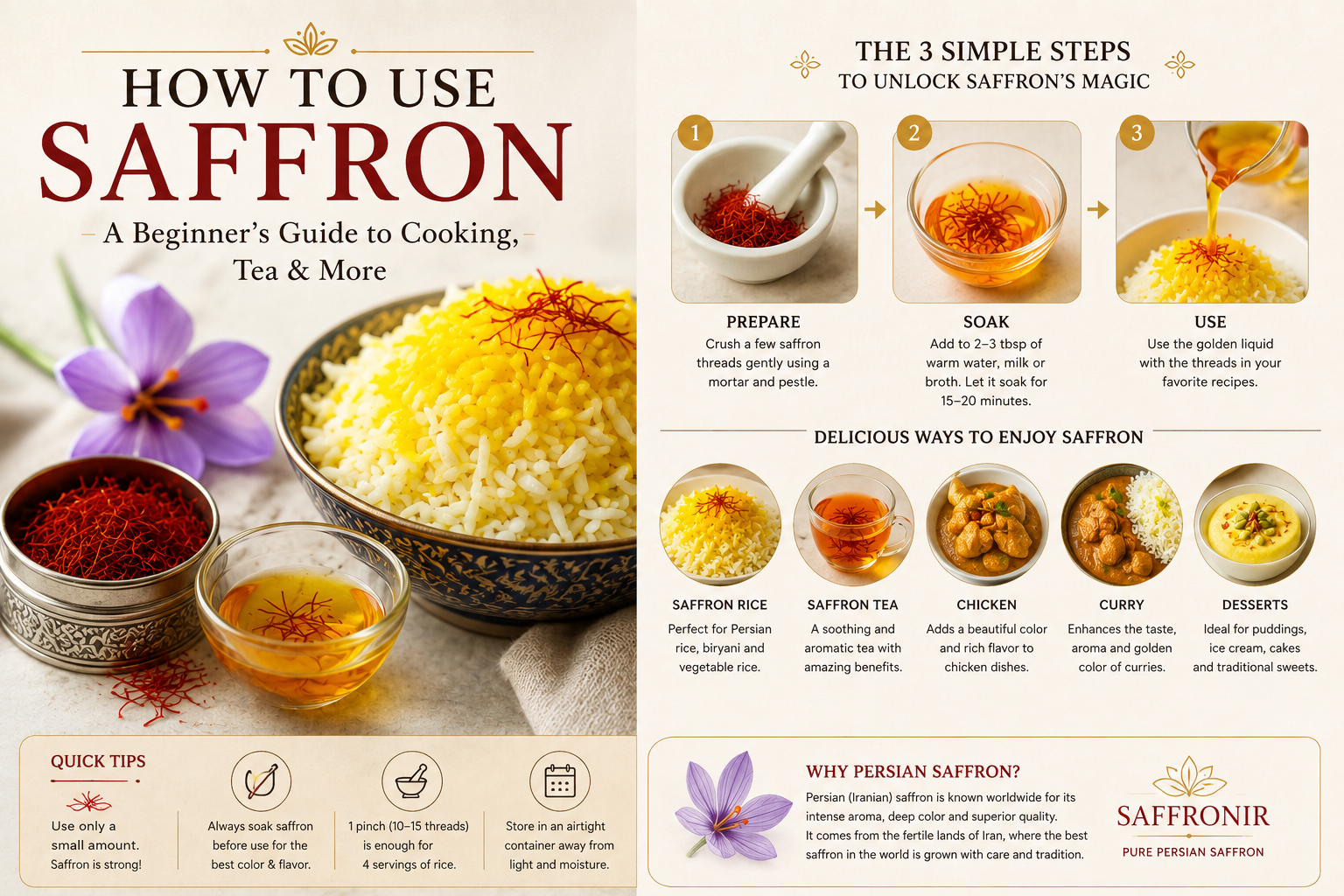
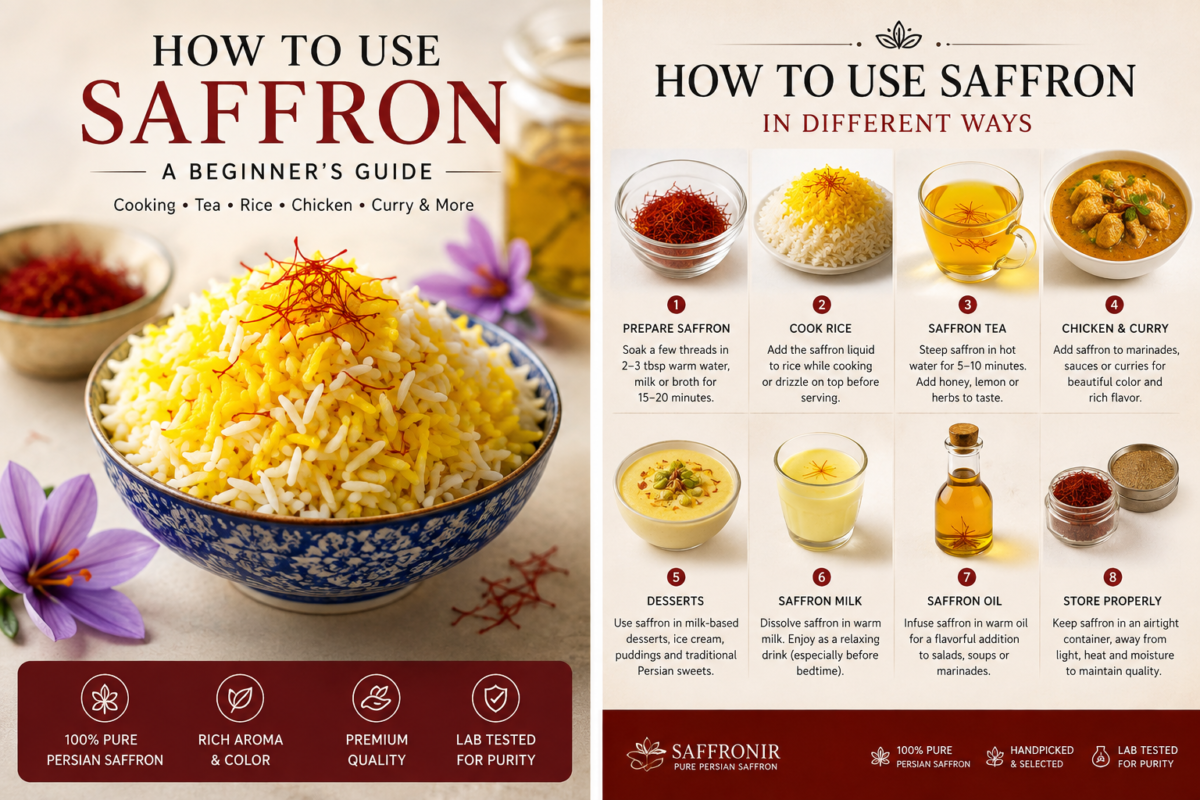
When cooking with saffron, it is usually best to prepare an infusion before adding it to your food. Gently crush a small amount of saffron and steep it in warm water for around 15–20 minutes. This allows the threads to release their colour and aroma. A traditional alternative is to place lightly crushed saffron over ice and let it melt slowly.
Avoid boiling saffron for a long time, as excessive heat can reduce some of its delicate aroma. Saffron is powerful, so a small pinch is often enough for a family-sized dish. Adding more does not necessarily create a better flavour; saffron should complement the other ingredients.
If you want to buy Saffron , you can buy them here. : Saffron Shop
How to Use Saffron in Cooking
Saffron works well with rice, chicken, seafood, vegetables, soups, sauces and desserts. It also pairs naturally with ingredients such as butter, citrus, nuts, cardamom and rose water.
For how to use saffron in cooking, prepare the saffron infusion separately whenever possible and add it to the dish at the appropriate stage. Adding saffron toward the later stages of cooking can help preserve its distinctive aroma.
How to Use Saffron to Cook Rice
One of the easiest ways to enjoy saffron is with rice. For a simple saffron rice recipe, prepare your rice as usual and make a saffron infusion separately. Mix some cooked rice with the infusion until it turns a rich golden colour, then spoon it over the remaining rice before serving.
This simple technique creates an attractive Persian-style finish and allows the saffron flavour to stand out without overpowering the rice.
Persian saffron rice is commonly served with chicken, lamb, fish or Persian stews. It can also be decorated with pistachios, almonds or barberries. For the complete recipe, link this section to your Saffron Rice – The Complete Guide to Persian Golden Rice pillar article.
How to Use Saffron in Tea
For how to use saffron in tea, add a few saffron threads to hot water and let them infuse for several minutes. You can then combine the infusion with black tea, green tea or herbal tea.
Saffron also pairs well with cardamom, rose petals and honey. This creates a fragrant and warming drink that highlights saffron’s natural aroma. Your Saffronir saffron tea products can be linked naturally within this section.
How to Use Saffron With Chicken and Curry
For how to use saffron with chicken, prepare a saffron infusion and add it to a marinade, sauce or finishing butter. Saffron pairs particularly well with lemon, onion, garlic and mild spices. Adding it toward the end of cooking can help retain its floral aroma.
For how to use saffron in curry, use a small amount of saffron infusion during the final stages of cooking. Saffron is especially suitable for creamy curries and dishes made with chicken, seafood or vegetables, where its delicate flavour can complement rather than overpower the other spices.
Saffron in Desserts and Milk
Saffron works beautifully with milk, cream, rice, nuts and sugar. You can use it in rice pudding, ice cream, custards, cakes and traditional Persian sweets. Infusing the saffron in warm liquid first helps distribute its colour and aroma more evenly.
Warm milk can also be infused with a few saffron threads and combined with honey, cardamom or nuts. If considering saffron during pregnancy or for a specific health purpose, consult a qualified healthcare professional rather than relying on general food content.
Choosing, Storing and Buying Saffron
Whole saffron threads are generally easier to inspect and measure because their colour and shape are visible. Saffron powder can be convenient, but its quality can be more difficult to assess visually. For this reason, choose saffron from a transparent and trusted supplier.
For everyday cooking with saffron, look for whole threads from a reputable source. Persian or Iranian saffron is widely appreciated for its aroma and colouring properties. When buying online, check the stated origin, packaging and supplier information.
If you want to buy Persian saffron online, choose a store that clearly explains the product’s origin and provides detailed product information and customer support. Saffronir offers a Persian saffron category as well as saffron packs and gift packs.
How to Store Saffron
Store saffron in a tightly sealed container in a cool, dry and dark place. Keep it away from moisture, direct sunlight and strong kitchen odours. Proper storage helps protect the saffron’s aroma, colour and overall quality.
Common Mistakes When Using Saffron
A few simple mistakes can prevent saffron from reaching its full potential. Using too much saffron, adding dry threads without giving them enough time to infuse, or boiling saffron for too long can affect the final result.
It is also important to choose a good-quality product. Adding saffron too early to a strongly flavoured dish may cause its delicate aroma to become difficult to notice. Start with a small amount and allow the saffron to complement the other ingredients.