What Is Iranian Saffron?
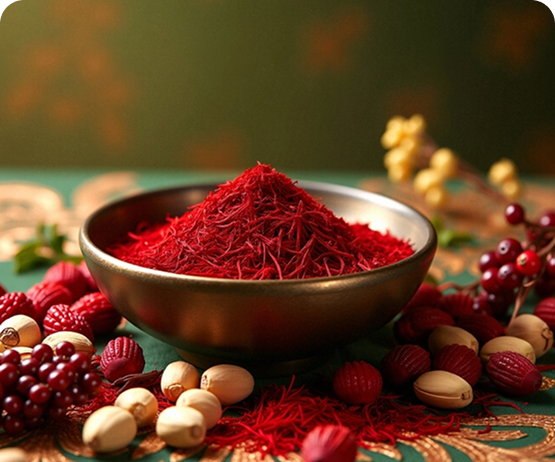
Iranian saffron is produced from the dried red stigmas of the Crocus sativus flower. The saffron flower has delicate purple petals and three red stigmas, which are carefully harvested, separated and dried.
Iran has a long-standing saffron-growing tradition, particularly in northeastern regions where saffron cultivation has developed alongside local agricultural practices.
The term Persian saffron is also commonly used to describe saffron originating from Iran. For shoppers looking for authentic Persian ingredients, the two terms are often used interchangeably.
Why Is Iranian Saffron So Popular?
The quality of saffron depends on several factors, including the plant material selected, harvesting, separation of the stigmas, drying, storage and handling.
One of the most important differences between saffron products is how much of the red stigma is retained and how much yellow style remains attached.
The red part is the most valuable part of the saffron thread. As a result, carefully selected all-red threads are often positioned as premium products.
However, origin alone does not guarantee quality. A good saffron should also be properly dried, clean, well stored and tested or assessed according to recognized quality criteria.
Iranian Saffron Grades Explained
You may encounter several traditional names when shopping for Iranian saffron.
1. Super Negin Saffron
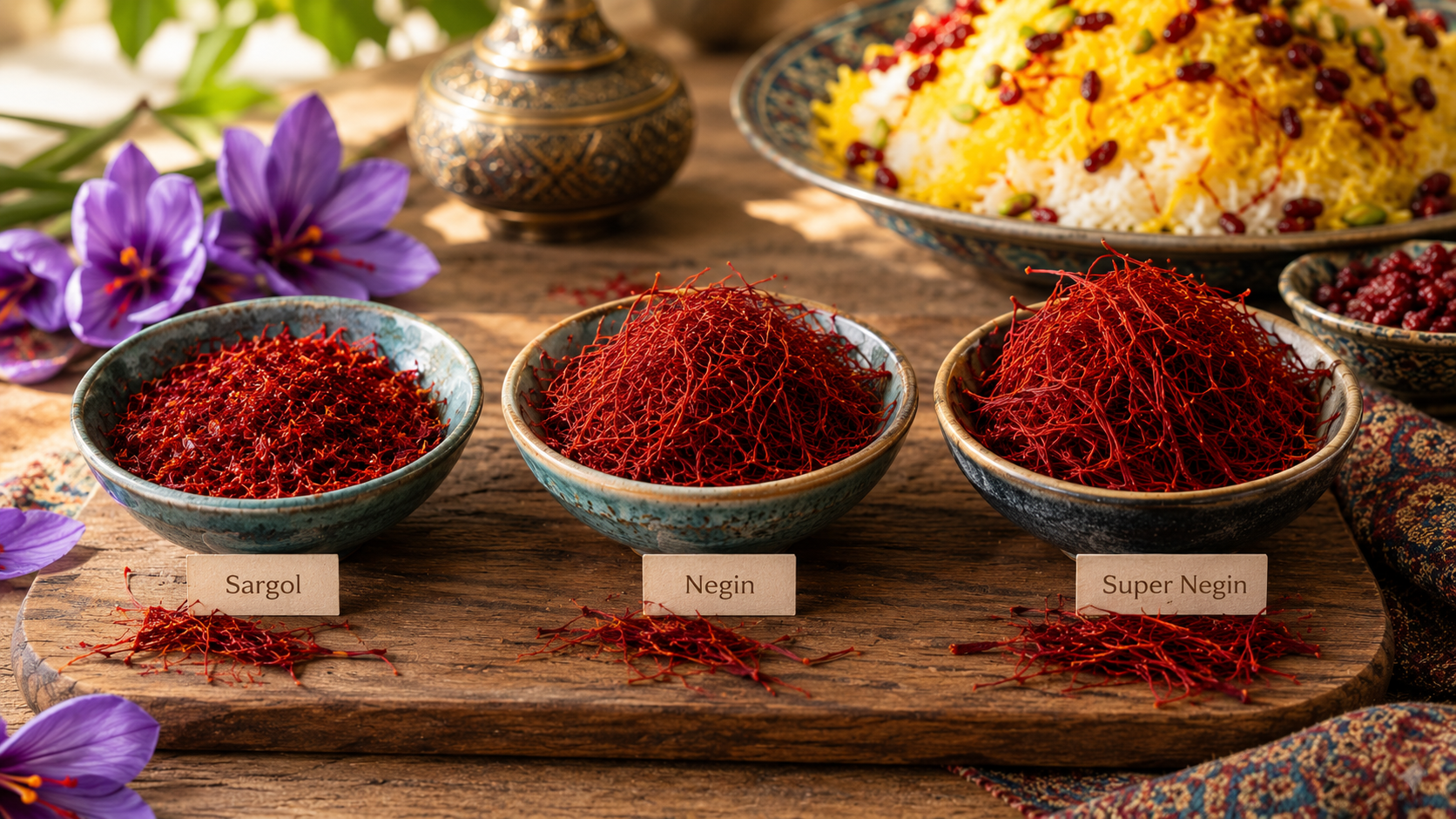
Super Negin is generally used for long, thick, carefully selected red saffron threads with very little or no yellow style attached.
It is especially popular for premium packaging and gift products because the threads have a striking appearance.
Super Negin is often chosen when presentation matters as much as culinary use.
2. Negin Saffron
Negin saffron consists of long, red saffron threads and is considered a premium type of Iranian saffron.
The threads are generally longer and more intact than shorter cut saffron. Negin is a popular choice for cooking, entertaining and premium saffron products.
For example, Saffronir offers Negin saffron in larger packs, including products with reported measurements for crocin, safranal and picrocrocin.
3. Sargol Saffron
Sargol means the “top of the flower” and refers to the red stigma tips without the longer yellow style.
Sargol is commonly available to consumers and can be an excellent choice for everyday cooking.
It works particularly well when you want strong colour and flavour without necessarily choosing the most visually premium long threads.
Saffronir’s normal packages use Sargol saffron, making this type a practical option for home cooks.
4. Pushal Saffron
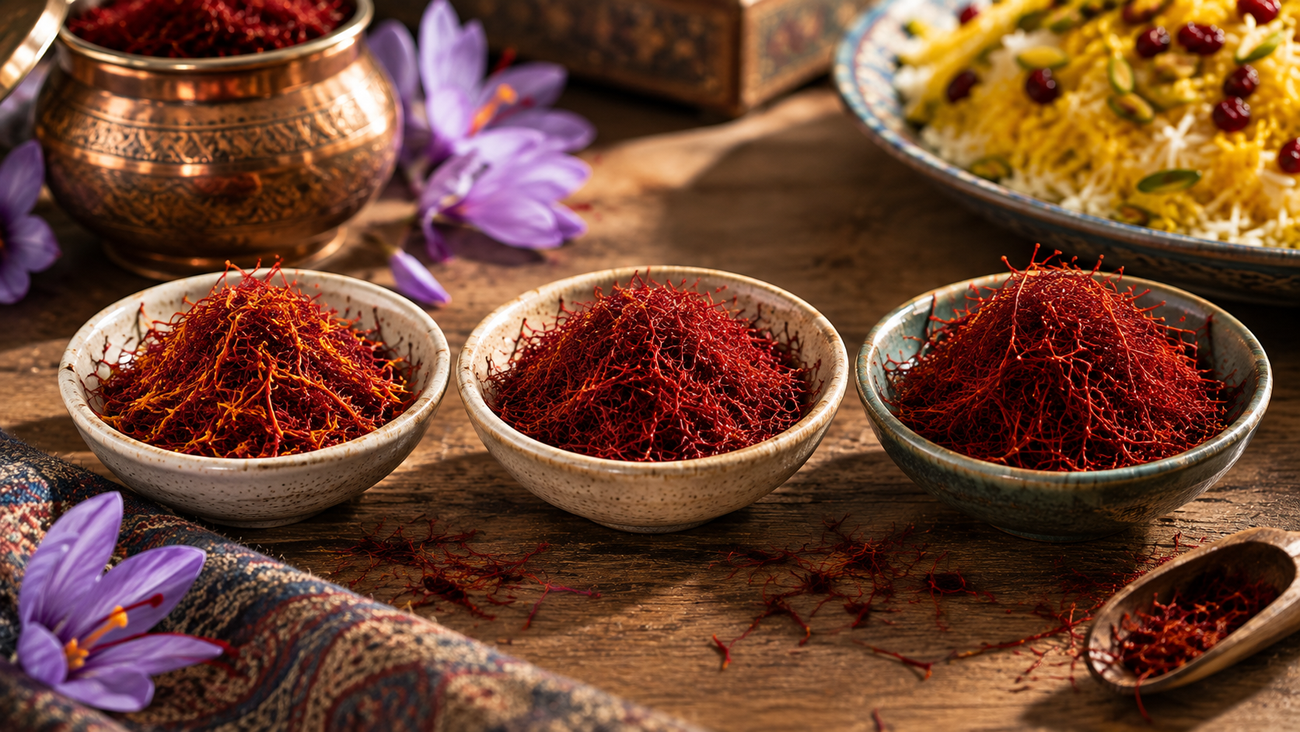
Pushal saffron contains red stigmas together with part of the yellow style.
Because more of the style remains attached, Pushal has a different appearance from all-red types such as Sargol and many Negin products.
It is still genuine saffron, but it is important to understand what you are paying for when comparing different types.
5. Bunch Saffron
Bunch saffron, sometimes called Dasteh, contains the complete saffron thread structure and is usually presented as small bundles.
It contains more of the yellow style than all-red saffron types.
This traditional presentation can be attractive, but shoppers interested primarily in colouring strength and concentrated red stigmas may prefer one of the more highly separated types.
Negin vs Sargol: Which Is Better?
There is no single answer for every buyer.
Negin is a good choice when you want long, attractive threads and premium presentation.
Sargol can be an excellent choice for everyday cooking when you want red saffron threads without paying specifically for long, visually uniform strands.
The important point is that the name of the grade should not be the only thing you consider.
Look at the saffron itself, its packaging, freshness, storage conditions and any available quality information.
How Is Saffron Quality Measured?
Saffron quality can be evaluated using laboratory testing as well as physical inspection.
The international ISO 3632 standard provides specifications for dried saffron in filament, cut-filament and powder forms.
Among the important characteristics used when evaluating saffron are compounds associated with:
- Crocin — related to saffron’s colouring strength
- Picrocrocin — associated with its bitter taste
- Safranal — associated with its characteristic aroma
This is why laboratory information can be more useful than marketing descriptions such as “premium” or “extra quality”.
When available, a laboratory analysis can give buyers a much clearer picture of the characteristics of a particular saffron batch.
How to Recognize Good Iranian Saffron
When buying Persian saffron, consider these points:
Deep red threads
High-quality all-red saffron should have a strong red to crimson appearance rather than being dominated by pale yellow material.
A natural aroma
Good saffron has a distinctive, complex aroma. It should not smell strongly artificial, chemical or musty.
Dry and properly stored
Saffron should be dry and protected from moisture, heat and excessive light.
Good packaging helps preserve its aroma, colour and overall quality.
Whole threads when possible
Whole saffron threads make it easier to inspect the product than finely ground saffron.
Powder can be convenient, but whole threads allow you to see what you are buying.
Clear product information
A reliable seller should be able to explain the saffron’s origin, type, packaging and quality information.
Iranian Saffron vs “Premium” Saffron
One important thing to remember is that words such as premium, luxury or Grade A are not enough to determine saffron quality.
Traditional names such as Negin and Sargol provide useful information about the physical form and selection of the saffron, while laboratory standards provide another way to evaluate measurable characteristics.
The best approach is to look at the complete picture rather than choosing a product simply because it has the most impressive label.
Which Iranian Saffron Should You Buy?
For everyday Persian cooking, Sargol saffron can be a practical choice.
For premium presentation, gifts or occasions where the appearance of the threads matters, Negin or Super Negin may be more suitable.
If you are preparing Persian saffron rice, desserts or drinks, the most important thing is to start with genuine, well-stored saffron and use it correctly.
If you are unsure which type to choose, consider how you plan to use it rather than automatically choosing the most expensive option.
If you want to buy Saffron , you can buy them here. : Saffron Shop
How to Use Persian Saffron
For the best flavour and colour, saffron threads are commonly ground gently and then infused with a small amount of warm water.
The resulting saffron infusion can be added to:
- Persian saffron rice
- Zereshk Polo
- Chicken dishes
- Stews
- Desserts
- Ice cream
- Tea and other drinks