When people search for Iranian saffron or Spanish saffron, they are often asking the same question: Which one should I buy?
Both come from the same plant, Crocus sativus, but saffron from different growing regions can have different traditions, processing methods, characteristics and ways of being presented to consumers.
Iran is one of the world’s most important saffron-producing regions, while Spain has its own long-established saffron tradition, particularly in Castilla-La Mancha. The Spanish government officially recognizes Azafrán de La Mancha as a protected designation of origin.
So, rather than asking whether one country automatically produces “better” saffron, it is more useful to understand what makes each type different and what to look for when buying.
Iranian Saffron: The Persian Tradition
Iranian saffron, also known as Persian saffron or saffron from Iran, has a long history in Persian cuisine and agriculture.
Iranian saffron is particularly associated with the Khorasan region. Saffron is traditionally used in Persian rice dishes, stews, chicken, desserts, tea and festive foods.
At Saffronir, the focus is specifically on Persian saffron. The company states that its saffron is sourced through local farmers in Iran and that it offers first-grade Persian saffron in its product range.
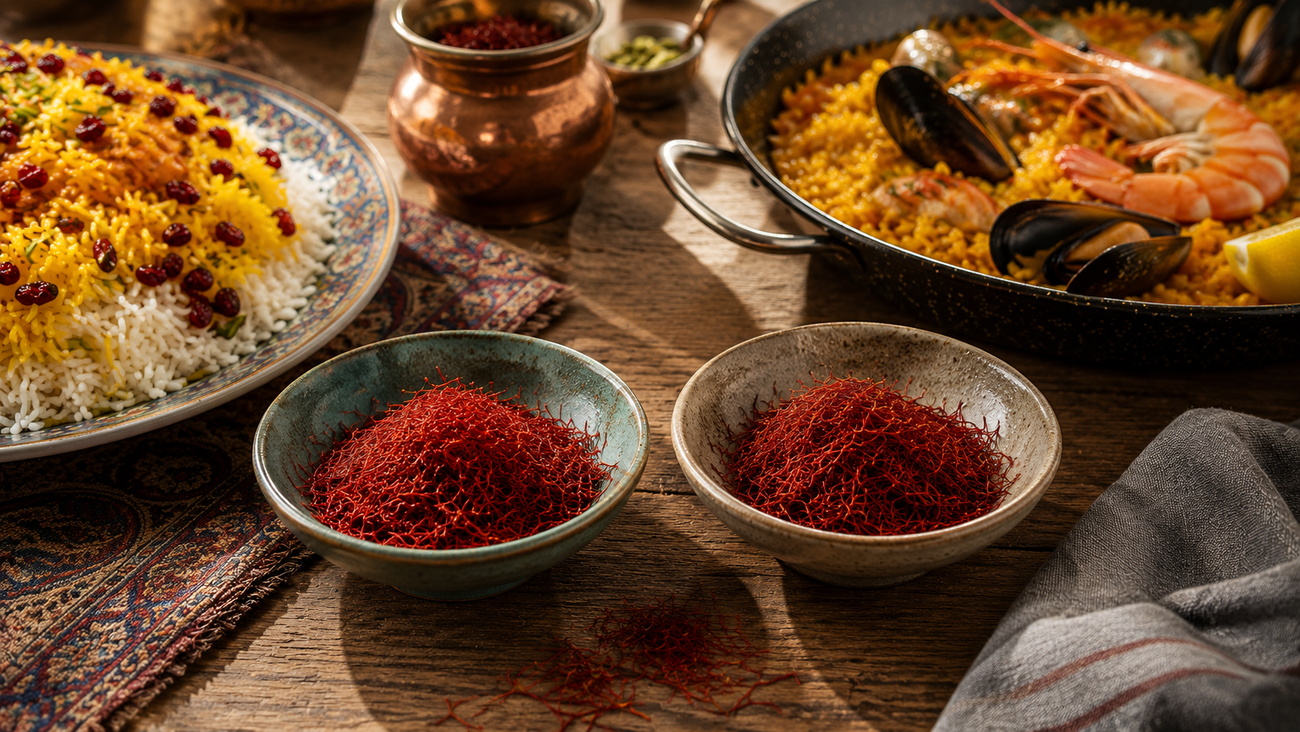
For someone looking to recreate Persian recipes such as saffron rice or zereshk polo, Iranian saffron is a natural choice because it connects directly with the culinary tradition behind those dishes.
Spanish Saffron: The La Mancha Tradition
Spain also has an important saffron tradition.
One of the best-known examples is Azafrán de La Mancha, produced in Castilla-La Mancha. The product has a protected designation of origin, meaning that production and processing must follow defined requirements within the designated geographical area.
The official documentation for Azafrán de La Mancha describes traditional production and drying practices that contribute to its distinctive characteristics.
Spanish saffron therefore has its own strong identity and should not simply be considered a substitute for Iranian saffron.
Iranian vs. Spanish Saffron: The Main Differences
| Iranian Saffron | Spanish Saffron | |
|---|---|---|
| Origin | Iran, especially Khorasan | Spain, especially Castilla-La Mancha |
| Culinary tradition | Persian and Middle Eastern cuisine | Spanish and Mediterranean cuisine |
| Famous uses | Saffron rice, stews, chicken, tea and desserts | Rice dishes, seafood, stews and Spanish cuisine |
| Protected regional example | Iranian origin and grading/sourcing | Azafrán de La Mancha PDO |
| Flavour | Floral, aromatic and distinctive | Delicate, aromatic and distinctive |
| Best choice | Persian recipes and Iranian cuisine | Spanish recipes and Spanish culinary tradition |
The important point is that country of origin alone does not determine quality.
How Do You Compare Saffron Quality?
Instead of choosing saffron only by country, look at several factors.
1. Origin
A trustworthy supplier should clearly state where the saffron comes from.
If a product is sold as Iranian saffron, the origin should be transparent rather than vague.
2. Form
Whole saffron threads are easier to inspect than powder.
You can see the colour, shape and condition of the threads before using them. This is particularly useful when buying premium saffron.
3. Aroma and Colour
Good saffron should have a distinctive aroma and release a strong golden colour when prepared correctly.
International standards exist for saffron specifications and testing. The current ISO 3632-1:2025 standard covers dried saffron in filament, cut-filament and powder forms.
4. Packaging and Storage
Saffron is sensitive to moisture, light and environmental conditions.
Good packaging helps protect its aroma and colour. After opening, keep saffron in an airtight container in a cool, dry and dark place.
Is Iranian Saffron Better Than Spanish Saffron?
There is no simple answer.
A high-quality Spanish saffron can be an excellent product, just as high-quality Iranian saffron can be excellent.
For buyers, the better question is:
Does this saffron have a trustworthy origin, good quality, appropriate packaging and characteristics that suit the food I want to prepare?
If your goal is authentic Persian cooking, however, Iranian saffron is the most natural choice because it is the saffron traditionally associated with dishes such as Persian saffron rice and zereshk polo.
Which Saffron Should You Choose?
Choose Iranian saffron if you:
- Want to prepare authentic Persian recipes
- Enjoy Persian saffron rice
- Want saffron traditionally used in Iranian cuisine
- Prefer Persian-origin saffron
- Are looking for a premium ingredient for cooking or gifting
Choose Spanish saffron if you:
- Specifically want saffron from Spain
- Are preparing traditional Spanish recipes
- Prefer products protected by the Azafrán de La Mancha designation
The right choice ultimately depends on your recipe, preference and confidence in the supplier.
How to Use Iranian Saffron
Once you have good-quality saffron threads, preparation is simple.
Gently crush a small amount and allow it to infuse in warm water before adding it to your dish. This helps release the colour and aroma gradually.
For Persian saffron rice, combine the infusion with a small portion of cooked rice and use it as the golden topping.
You can also use Iranian saffron in tea, chicken, desserts and other dishes.
For a complete preparation guide, link this section to our How to Use Saffron article.
Why Origin Matters When Buying Saffron Online
Online shoppers often see products simply labelled “saffron” without much information about where they come from.
That makes transparency important.
Before buying, check:
- Country of origin
- Whether you are buying threads or powder
- Packaging
- Product weight
- Supplier information
- Storage recommendations
Saffronir focuses specifically on Iranian saffron and currently offers several formats, including saffron threads, normal packages, metal packs and gift boxes.
Final Thoughts
Iranian and Spanish saffron both have rich histories and distinctive culinary traditions. Neither should be judged simply by its country of origin.
For Persian cooking, however, Iranian saffron offers the strongest connection to the recipes, flavours and traditions that make Persian cuisine special.
If you are preparing saffron rice, zereshk polo, Persian tea or other Iranian dishes, choosing authentic Iranian saffron is a natural place to start.
The most important rule is simple: look beyond the label, choose a transparent supplier and buy saffron that you can trust.
If you want to buy Saffron , you can buy them here. : Saffron Shop